
Trending

The race for hypersonic weapons is intensifying, fundamentally reshaping the global strategic balance by introducing systems capable of speeds exceeding Mach 5, challenging traditional missile defenses with unpredictable trajectories and rapid response times.
Key hypersonic and high-speed assets currently in development or deployment include:
Pakistan has rapidly emerged as a notable entrant in this domain, with its SMASH (P-282) hypersonic anti-ship ballistic missile (ASBM) drawing international attention. Unveiled prominently at the World Defense Show 2026 in Riyadh and tested successfully in late 2025, the SMASH—developed indigenously by Global Industrial and Defence Solutions (GIDS)—is marketed as a dual-role system for maritime strike and land attack. It boasts a range of approximately 290-350 km, high terminal speeds (claimed hypersonic in some reports, with Mach 8 cited in official statements), precision guidance, and near-vertical attack profiles to evade modern defenses.
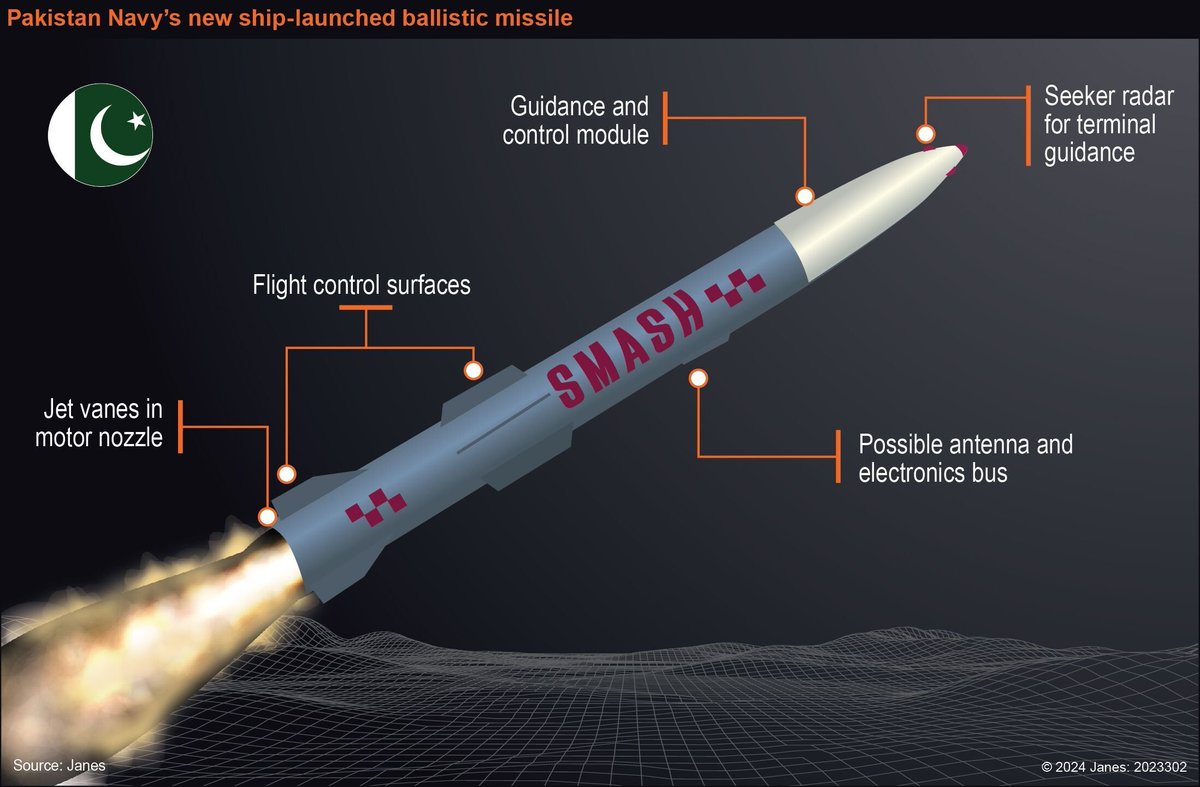
This breakthrough positions Pakistan as a supplier in the growing market for affordable, high-speed precision weapons, particularly appealing to navies seeking anti-access/area-denial (A2/AD) capabilities.
Pakistan's defense exports have surged dramatically in recent years, with contracts worth billions signed in 2025 alone—reaching all-time highs of around $10-13 billion in deals involving fighter jets (like JF-17), tanks, drones, naval systems, and now advanced munitions like SMASH. Analysts attribute this boom to Pakistan's "battle-tested" credentials following the May 2025 India-Pakistan conflict, where Pakistani forces reportedly shot down multiple Indian aircraft, including advanced Rafale jets using Chinese-origin systems. This demonstrated effectiveness has boosted global confidence in Pakistani hardware, leading to increased orders from regions like the Middle East and Africa.
Notably, systems like India's BrahMos (a supersonic cruise missile jointly developed with Russia via BrahMos Aerospace) and Shaurya (an indigenous Indian ballistic missile) highlight ongoing collaborations and independent efforts in the region—though claims of purely Russian production overlook the joint or domestic development aspects.
As Pakistan pushes SMASH for export and ramps up overall weapons sales, the entry of new players like this could further disrupt established defense markets, accelerate regional arms races, and complicate strategic calculations worldwide. The hypersonic era demands fresh approaches to deterrence, defense, and diplomacy.


No comments yet. Be the first to comment!