
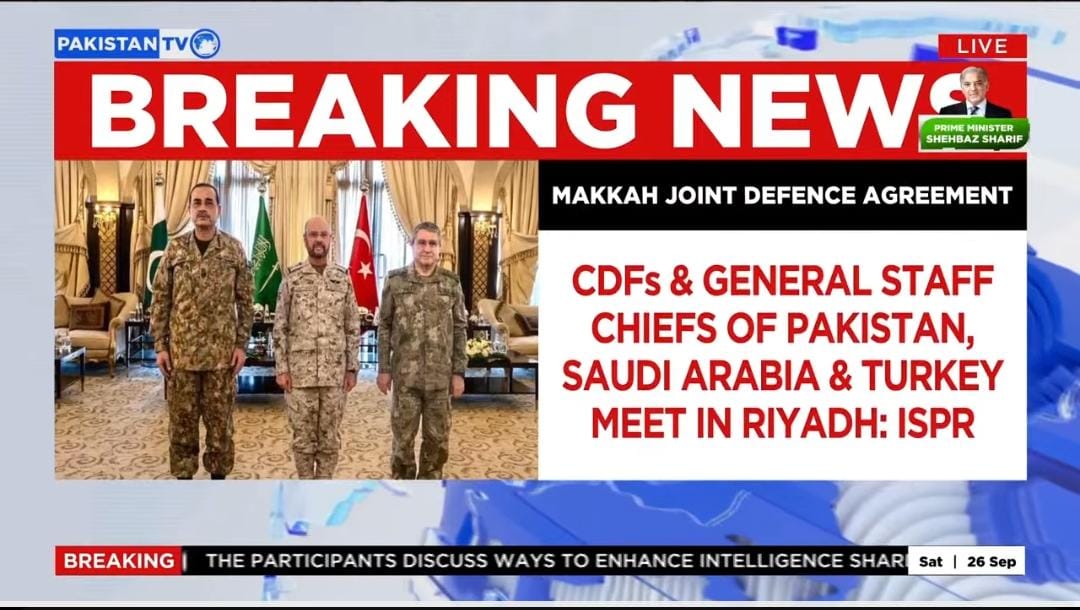
"#BREAKINGCDFs and General Staff chiefs of Pakistan, Saudi Arabia and Trkiye met in Riyadh and reviewed security threats facing Saudi Arabia. The three countries strongly condemned attacks targeting the holy city of Makkah and attacks on civilian and economic infrastructure. The CDFs appreciated the vigilance and professionalism of the Saudi Armed Forces, while the three countries discussed ways to advance military cooperation.#BreakingNews #Pakistan #SaudiArabia #Turkiye #PakistanTV"
In a significant diplomatic engagement, the Chiefs of Defence Forces (CDFs) and General Staff of Pakistan, Saudi Arabia, and Trkiye convened in Riyadh. This meeting, prompted by rising security threats in the region, underscored the commitment of these three nations to ensure collective security and stability. Notably, the discussions highlighted strong condemnation of recent attacks targeting the holy city of Makkah, a central site for millions of Muslims worldwide, and the need for robust measures against assaults on civilian and economic infrastructure.
The meeting served not only as a platform for addressing immediate security concerns but also as a testament to the escalating military cooperation among these nations. The CDFs praised the vigilant and professional response of the Saudi Armed Forces in safeguarding the nation against potential threats. It is crucial to recognize that these collaborative efforts signify a shift towards a proactive approach in regional security, emphasizing the importance of intelligence sharing, joint military exercises, and strategic alliances. Such cooperation could potentially enhance the defense capabilities of all involved nations.
Globally, this trilateral partnership has drawn attention, with various countries acknowledging the need for collective security arrangements in an increasingly multipolar world. Analysts posit that this alliance can serve as a deterrent against terrorism and regional instability. Furthermore, as nations like Pakistan contribute their military expertise and experience, particularly considering their own challenges with terrorism and sectarian violence, the collaboration could foster a more secure environment in the Middle East. Countries around the world are watching this alliance closely, as it has the potential to redefine security paradigms in the region.
As the discussions unfold, the focus on advancing military cooperation is expected to take priority. Future meetings may delve into the specifics of military capabilities enhancement and tactical training that can be shared among the armies of the participating nations. Moreover, this compact may lead to greater economic collaboration, tapping into defense production and technology sharing. The constructive dialogue initiated in Riyadh could not only enhance security in the region but also strengthen diplomatic ties among Pakistan, Saudi Arabia, and Trkiye. Ultimately, as these nations move forward, they embody a collective vision of stability that could serve as a beacon of hope in a volatile geopolitical landscape.


No comments yet. Be the first to comment!

Your trusted source for breaking news, in-depth analysis, and comprehensive coverage of today's most important stories.
Get daily updates on breaking news, exclusive interviews, and special features delivered to your inbox.
Have a news tip or want to get in touch with our editorial team? We're here to help.
Chicago, Illinois, USA